
Enat Market Editorial
30 August 2026
Preserving Handwoven Habesha Textiles: The Art of Shemma Craft
Discover the traditional Ethiopian art of Shemma weaving, from handwoven cotton and Tilet embroidery to Habesha Kemis and Netela. A timeless craft that preserves culture, supports artisans and celebrates Ethiopian heritage.
Preserving Handwoven Habesha Textiles: The Art of Shemma Craft
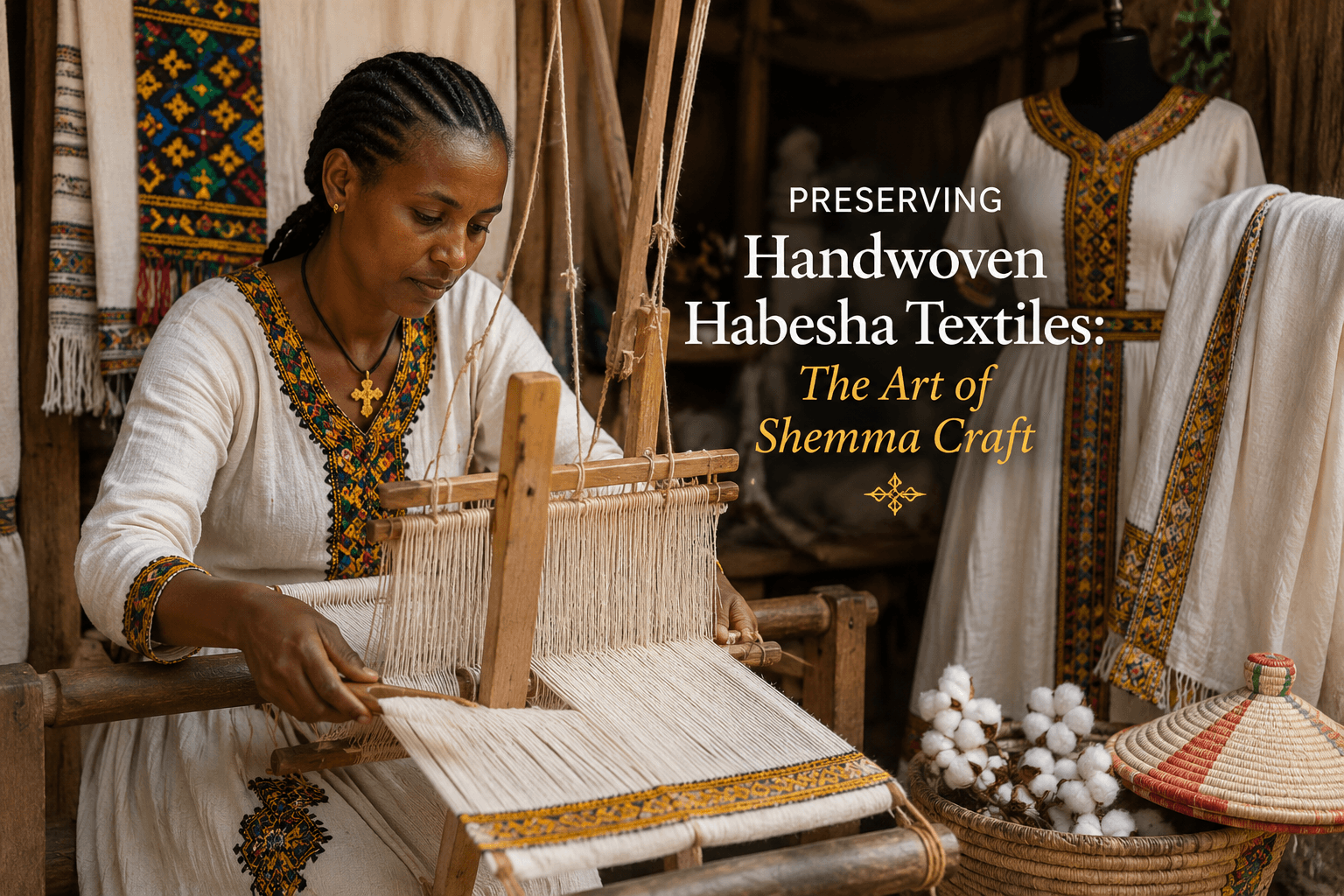
For generations, Ethiopian weavers have transformed cotton thread into beautiful Shemma, the traditional handwoven fabric used for Habesha Kemis, Netela shawls and ceremonial clothing.
Traditional Shemma Weaving
Shemma is usually woven by hand on traditional wooden looms. The process requires patience and skill as weavers carefully pass thread through the loom to create lightweight, durable cotton fabric.
The Beauty of Tilet
Many Habesha textiles feature colourful Tilet, decorative woven or embroidered borders that give Ethiopian clothing its distinctive look. Designs may include geometric patterns, crosses and gold or colourful thread.
Preserving Ethiopian Heritage
Shemma weaving is more than textile production. It is a cultural tradition passed from one generation to another.
Supporting handmade Ethiopian textiles helps preserve traditional skills, support local artisans and keep this important heritage alive.
At Enat Market, we celebrate Ethiopian craftsmanship and the stories behind traditional products.